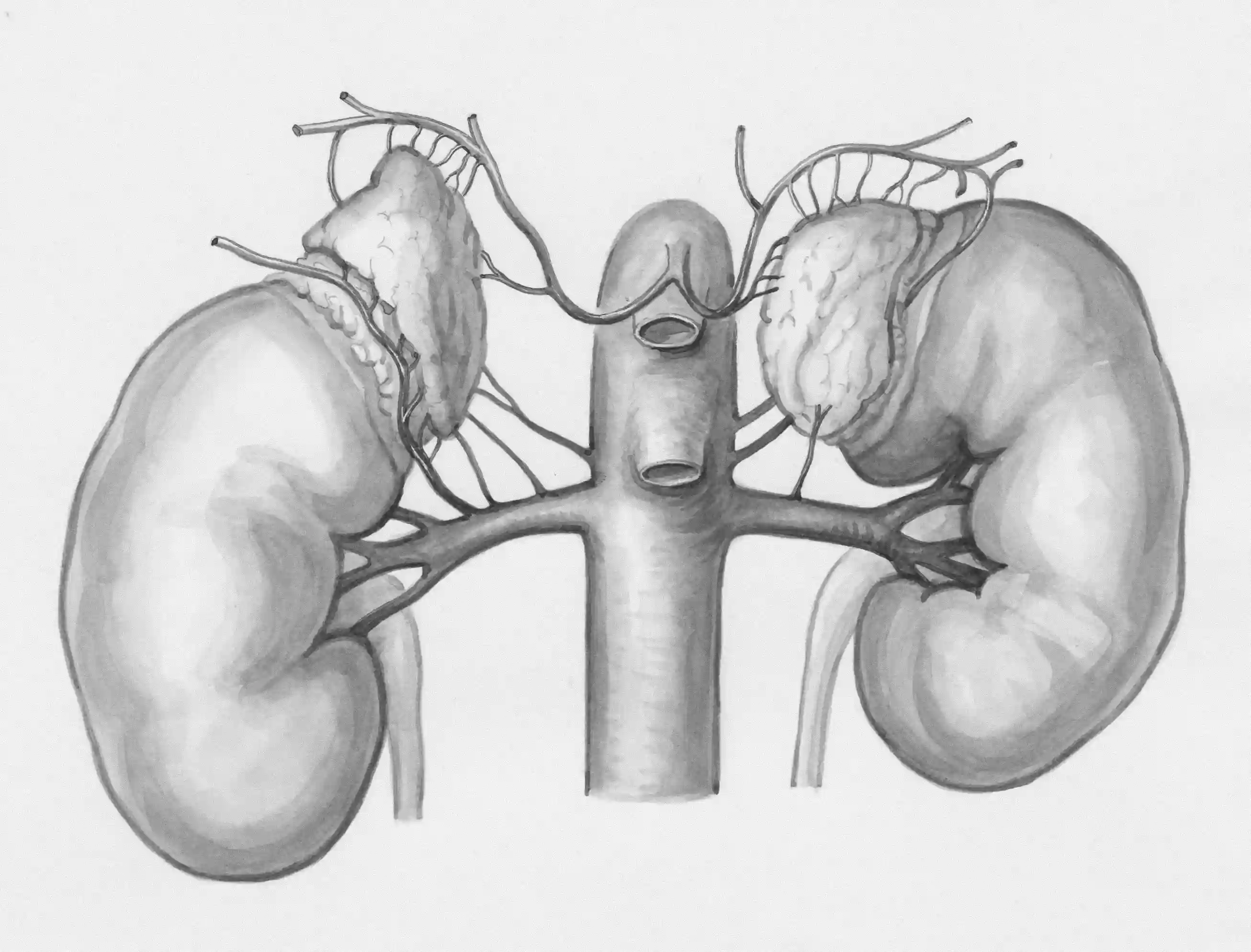
There is a blood test I now add to almost every routine check I do for Black patients over 40. It is not part of the standard protocol for that appointment. It is not what the appointment was booked for. But after years of watching people receive serious kidney disease diagnoses that should have been caught five years earlier, I stopped waiting to be asked.
The test takes 48 hours to return. And in a meaningful proportion of cases - far higher than it should be - what comes back is a kidney function that has been quietly declining for years without producing a single warning symptom.
That is the defining feature of chronic kidney disease in its early stages: silence. Your kidneys continue filtering your blood, regulating your blood pressure, managing your electrolytes, producing hormones - doing everything they are supposed to do - even when functioning at 60%, or 50%, or 40% of their normal capacity. There is no pain. There is no visible sign. There is only a slow, invisible decline that, undetected, can reach the point of needing dialysis before anyone thought to look.
For Black and African adults in the UK, the risk of that silent decline is three times higher than for white adults. This gap is driven by biology, by the disproportionate burden of hypertension and diabetes in our communities, and by a healthcare system that has historically both under-screened and - through a now-corrected error in the eGFR formula - systematically underestimated kidney disease severity in Black patients.
Why Black patients are disproportionately affected
Hypertension: The single most important modifiable cause of chronic kidney disease (CKD) in Black patients. As described in our hypertension guide, Black adults develop high blood pressure earlier and more severely than white adults. Sustained high blood pressure damages the small blood vessels within the glomeruli (the filtering units of the kidney), causing progressive scarring and loss of function over years.
Diabetes: The second leading cause of CKD globally and in Black communities. Given the 2-4 times higher rate of type 2 diabetes in Black populations, this compounds the kidney disease risk significantly.
APOL1 gene variants: A critically important factor specific to people of African ancestry that is not yet sufficiently recognised in standard clinical practice. The APOL1 gene (Apolipoprotein L1) codes for a protein that provides natural protection against the African sleeping sickness parasite Trypanosoma brucei. Two specific high-risk variants (G1 and G2) are common in West African-ancestry populations - present in approximately 13% of African-Americans and similar proportions of Black British people of West African origin. People who inherit two high-risk APOL1 copies have a dramatically elevated risk of certain forms of kidney disease, including focal segmental glomerulosclerosis (FSGS) and HIV-associated nephropathy, independent of blood pressure or diabetes. This genetic factor partly explains why Black patients develop more severe kidney disease at younger ages even with comparable levels of other risk factors.
The historical eGFR race correction error: For decades, the formula used to calculate estimated Glomerular Filtration Rate (eGFR) included a race correction that multiplied the result by 1.159 for patients identified as Black. The justification was a population-level difference in average serum creatinine levels attributable to greater muscle mass. The consequence was that Black patients appeared to have a higher eGFR - better apparent kidney function - than the same creatinine value would indicate in a white patient. This meant that CKD in Black patients was systematically underdiagnosed or diagnosed at a later stage. Most UK laboratories have now removed this race correction. If you are Black and have kidney function results from before 2022, they may have used the old formula - your actual kidney function may have been worse than the numbers showed.
Understanding CKD stages
CKD is staged using eGFR (estimated Glomerular Filtration Rate), expressing kidney filtering capacity as a percentage of normal.
| Stage | eGFR | Description |
|---|---|---|
| G1 | 90 or above | Normal or high (with evidence of kidney damage) |
| G2 | 60-89 | Mildly reduced |
| G3a | 45-59 | Mildly to moderately reduced |
| G3b | 30-44 | Moderately to severely reduced |
| G4 | 15-29 | Severely reduced |
| G5 | Below 15 | Kidney failure |
Equally important - urine albumin: Albumin in the urine (albuminuria or proteinuria) indicates kidney damage even when eGFR is still normal. The urine albumin-to-creatinine ratio (ACR) should always be measured alongside eGFR. An ACR above 3 mg/mmol is abnormal and above 30 mg/mmol indicates significant kidney damage. Always ask for both tests.
Case study: Emeka's silent decline
Emeka, 48, a project manager from Lagos based in Birmingham, came to me for a repeat prescription for his antihypertensive medication. His blood pressure was being managed. He felt well. He had no kidney-related symptoms.
I added kidney function and a urine ACR to his routine bloods. I did not tell him I was particularly worried - I was not. It was my routine addition for Black patients over 40 with hypertension.
His results: eGFR 44 (Stage 3b CKD). Urine ACR 35 mg/mmol (significant albuminuria).
He had moderately severe CKD with significant proteinuria, almost certainly driven by years of hypertension. He had no symptoms whatsoever.
The management plan: optimise blood pressure to below 130/80 (he was at 138/86); add an SGLT2 inhibitor (dapagliflozin has specific evidence for slowing CKD progression independent of diabetes); add an ACE inhibitor specifically for its kidney-protective effects in proteinuric CKD; dietary protein and sodium advice; referral to nephrology.
Eighteen months later: his ACR has reduced from 35 to 18 mg/mmol. His eGFR has remained stable at 43. Without intervention, progressive decline to requiring dialysis within a decade was likely.
"I had no idea," he told me. "I felt completely well."
The medications that protect kidneys - and those that damage them
Kidney-protective medications:
ACE inhibitors (ramipril, lisinopril) and ARBs (losartan, candesartan) reduce pressure within the kidney's filtering units and reduce proteinuria. They slow CKD progression specifically in proteinuric CKD - evidence is strong. Monitor potassium and creatinine after starting.
SGLT2 inhibitors (dapagliflozin, empagliflozin) have demonstrated dramatic reductions in CKD progression in large randomised trials (CREDENCE, DAPA-CKD, EMPA-KIDNEY), independent of diabetes or blood pressure effects. NICE now recommends them for people with CKD and proteinuria.
Finerenone: A newer mineralocorticoid receptor antagonist with specific evidence for reducing CKD progression in people with diabetes and CKD.
Medications to avoid or use with caution in CKD:
NSAIDs (ibuprofen, naproxen, diclofenac): Reduce kidney blood flow and accelerate damage. Avoid in CKD. Use paracetamol instead.
Metformin: Requires dose adjustment or stopping as eGFR declines (typically stop when eGFR falls below 30).
Many antibiotics, contrast agents, and other medications require dose adjustment in CKD. Always inform any prescriber, pharmacist, or hospital doctor that you have kidney disease before any new medication is prescribed.
Sources: NICE Clinical Guideline NG203 - Chronic Kidney Disease (2021); Bikbov B et al, The Lancet 2020 (global CKD burden); Freedman BI et al, Clinical Journal of the American Society of Nephrology 2021 (APOL1 variants); Heerspink HJL et al, NEJM 2020 (DAPA-CKD trial); NHS England - Equality and Health Inequalities in Kidney Care 2022; Perkovic V et al, NEJM 2019 (CREDENCE trial).