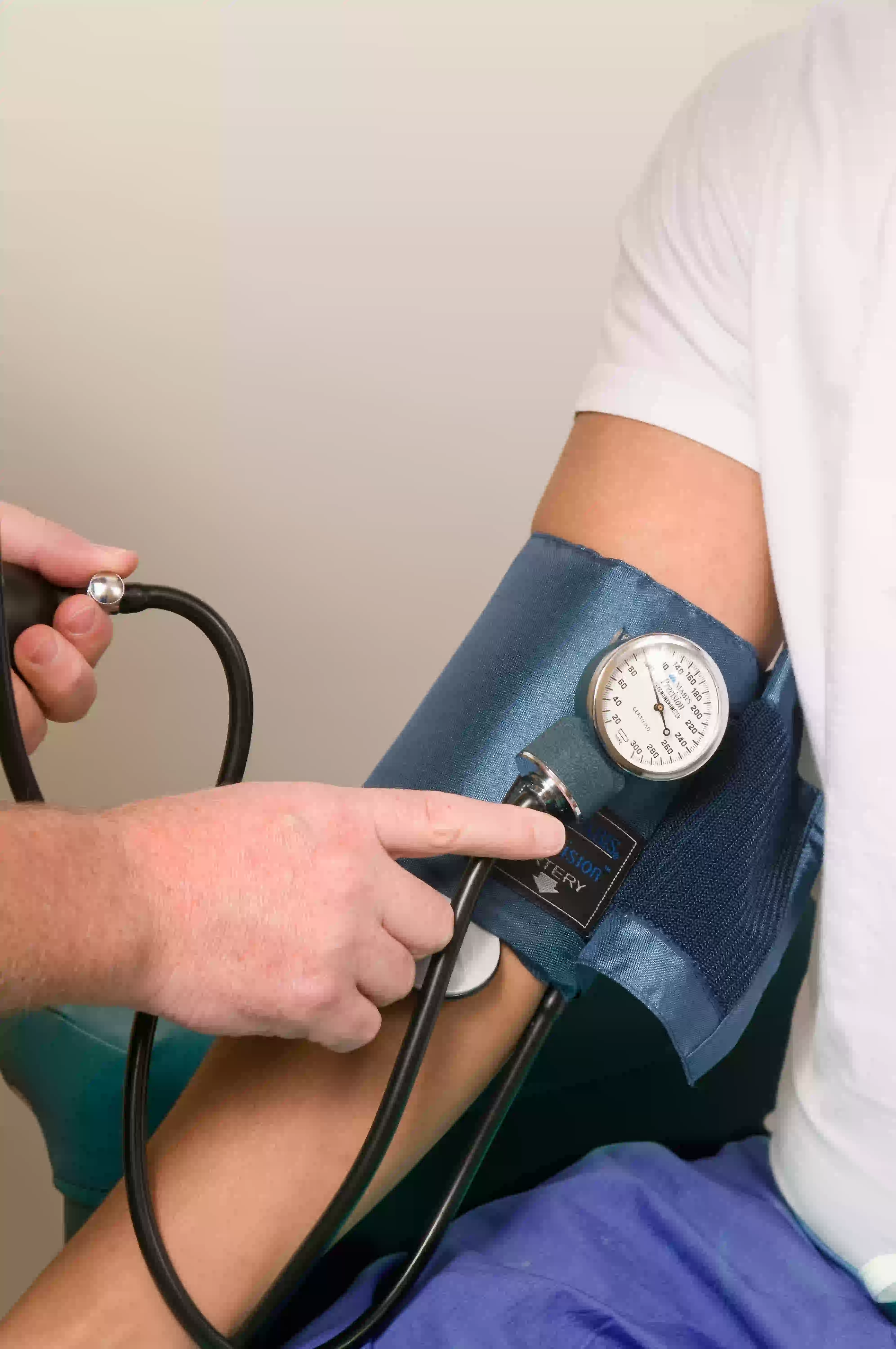
My most memorable hypertension consultation was not dramatic. A 52-year-old accountant sat across from me - fit, nonsmoker, controlled diet, no family history he knew of - and his blood pressure reading was 178/104. He had come in for a completely different reason. He felt fine.
That is the thing about high blood pressure in Black and African patients that keeps me up at night as a clinician. It arrives quietly, parks itself in the body for years, does its damage in silence, and by the time someone notices - because of a stroke, a heart attack, failing kidneys - the conversation we should have had a decade earlier is long overdue.
The blood pressure disparity affecting Black and African adults is not subtle. It is stark, consistent, and well-documented across decades of research on both sides of the Atlantic. Black adults develop hypertension approximately 10 years earlier than white adults on average. The condition is more severe at diagnosis. The downstream consequences - stroke, heart failure, kidney disease - occur at higher rates and at younger ages.
And yet the treatment most commonly prescribed first does not work as well in Black patients. This is not a secret buried in specialist journals. It is in the NICE guidelines that every UK GP has access to. It just does not always make it to the consultation room.
Why blood pressure is higher in Black and African adults
Several mechanisms are well understood. Black adults have higher rates of salt sensitivity - meaning blood pressure responds more strongly to sodium intake than in other populations. There is evidence of differences in kidney handling of sodium, in the renin-angiotensin-aldosterone system, and in endothelial function.
Chronic psychosocial stress has measurable effects on blood pressure. The documented physiological effects of experiencing racism and discrimination - sustained activation of the hypothalamic-pituitary-adrenal axis, elevated cortisol, chronic sympathetic nervous system activation - contribute to cardiovascular risk in ways that are increasingly well understood in the scientific literature. This is not speculation. It is measured in the data.
Vitamin D deficiency, which is nearly universal in dark-skinned people living in the UK due to the biology of melanin and UK sunlight, is associated with higher blood pressure through multiple mechanisms including effects on the renin-angiotensin system. See our dedicated vitamin D guide for more.
Dietary salt intake in many African diaspora communities in the UK is high - from stock cubes, processed foods, smoked fish, and soy sauces. Each gram of salt reduction per day reduces systolic blood pressure by approximately 1-2 mmHg. Reducing from the UK average of 8-9g/day to below 6g/day can reduce systolic pressure by 5-7mmHg - comparable to a single medication.
The medication that does not work as well - and what to use instead
This is perhaps the most practically important point in this guide.
First-line hypertension treatment in the general UK population is typically an ACE inhibitor or ARB - medications like ramipril, lisinopril, losartan, or candesartan. These work by blocking the renin-angiotensin system, reducing the production of angiotensin II (a potent blood vessel constrictor) and aldosterone.
In Black patients, the renin-angiotensin system tends to be less active. This means ACE inhibitors and ARBs - which work primarily by blocking this system - are significantly less effective. Studies show they reduce blood pressure by approximately half as much in Black patients as in white patients at equivalent doses.
NICE guidelines explicitly state that for Black patients of African or Caribbean origin, first-line treatment should be a calcium channel blocker (such as amlodipine or felodipine) rather than an ACE inhibitor or ARB. Calcium channel blockers work by relaxing the smooth muscle in blood vessel walls, reducing peripheral resistance. They are equally effective across ethnic groups.
If you are Black, on ramipril or losartan, and your blood pressure is not well controlled despite adherence to medication - ask your GP specifically whether a calcium channel blocker would be more appropriate as your primary agent. This is a documented, guideline-supported clinical recommendation.
Understanding your blood pressure numbers
Blood pressure is recorded as two numbers: systolic (when the heart beats) over diastolic (between beats), measured in mmHg.
| Reading | Category |
|---|---|
| Below 120/80 | Normal |
| 120-129 systolic, below 80 diastolic | Elevated |
| 130-139/80-89 | Stage 1 hypertension |
| 140/90 or above | Stage 2 hypertension |
| 180/120 or above | Hypertensive crisis - seek urgent care |
The lifestyle changes that genuinely work
Lifestyle modification is not an alternative to medication for established hypertension - it is a complement to it. But the evidence for specific interventions is genuinely strong.
Salt reduction: The evidence is robust and consistent. Reducing dietary sodium from the UK average (8-9g/day) to below 6g/day reduces systolic blood pressure by approximately 5-7mmHg. The biggest sources of salt in UK diets are processed foods, bread, and restaurant meals - not the salt added at the table. Reading food labels and choosing lower-salt options makes a meaningful difference. For reference, 6g of salt contains approximately 2.4g of sodium.
The DASH diet: The Dietary Approaches to Stop Hypertension diet - high in fruit, vegetables, whole grains, and low-fat dairy, and low in saturated fat, sodium, and red meat - reduces systolic blood pressure by 8-14mmHg in studies. It is the closest evidence-based dietary framework to traditional African eating patterns, modified for a UK context.
Exercise: 150 minutes of moderate aerobic activity per week reduces systolic blood pressure by approximately 5-8mmHg. Walking, swimming, cycling, and dancing all count. The effect is independent of weight loss.
Alcohol reduction: Alcohol raises blood pressure in a dose-dependent relationship. Reducing intake to below 14 units per week has measurable benefit; reducing to below 7 units per week has more.
Weight loss: Each kilogram of weight lost reduces systolic blood pressure by approximately 1mmHg. For someone who is significantly overweight, meaningful weight loss can reduce blood pressure by 10-15mmHg - equivalent to a medication.
Stress management: Chronic stress activates the sympathetic nervous system and raises blood pressure. Regular relaxation practice - whether through meditation, prayer, exercise, or social connection - has documented blood pressure benefits.
Home blood pressure monitoring - why it matters
A single clinic reading is often unreliable. "White coat hypertension" - blood pressure elevated purely by the anxiety of being in a medical setting - affects approximately 15-30% of people. Conversely, "masked hypertension" - normal clinic readings but elevated home readings - affects a similar proportion.
Home blood pressure monitoring is strongly recommended for people with hypertension or suspected hypertension. A validated home monitor (check the British and Irish Hypertension Society list at bihsoc.org) costs 20-40 pounds. Take two readings in the morning before medication and food, after 5 minutes of sitting quietly, for a week. Record all results.
The average of these readings is more accurate for treatment decisions than any single clinic measurement.
Case study: Mr. Okonkwo's decade of undertreated hypertension
Emmanuel Okonkwo, 58, was referred to me from a colleague. He had been on ramipril 10mg for 11 years. His blood pressure at every clinic visit for those 11 years had been above 150/95. His GP had increased the dose twice and added a thiazide diuretic. It had never come under control.
When I reviewed his medication history, the pattern was immediately recognisable. He was on an ACE inhibitor as his primary agent. He was Black. His blood pressure was consistently uncontrolled despite doses at or near the maximum.
I switched him to amlodipine 5mg as the primary agent and continued the diuretic. At his 4-week review his blood pressure was 128/78 - normal range.
Eleven years of inadequately controlled hypertension had exposed him to significantly elevated stroke and heart disease risk - for a reason that was entirely addressable with a medication switch that should have happened on day one.
He was understandably frustrated. I was frustrated on his behalf. This is not an unusual story.
When to seek urgent help
Go to A&E or call 999 if your blood pressure reading is above 180/120, particularly if accompanied by headache, visual disturbance, chest pain, breathlessness, or confusion. This is a hypertensive emergency requiring immediate treatment.
If your reading is above 180/120 with no symptoms, call 111 or your GP urgently for same-day assessment.
The annual check - what should happen
People with hypertension on treatment should have at minimum an annual review covering: blood pressure control, medication side effects, kidney function and electrolytes (annually), cardiovascular risk assessment, weight and lifestyle, and a urine dipstick for protein (marker of kidney damage).
If your annual review does not include all of these, ask for them. They are all part of standard hypertension management in NICE guidelines.
Sources: NICE Clinical Guideline NG136 - Hypertension in Adults (2019, updated 2023); Brewster LM et al, BMJ 2004 (antihypertensive therapy in Black patients); Sacks FM et al, NEJM 2001 (DASH diet); Williams B et al, European Heart Journal 2018 (ESC/ESH hypertension guidelines); NHS Digital - Health Survey for England 2021; Bautista LE, American Journal of Hypertension 2003 (psychosocial stress and hypertension).